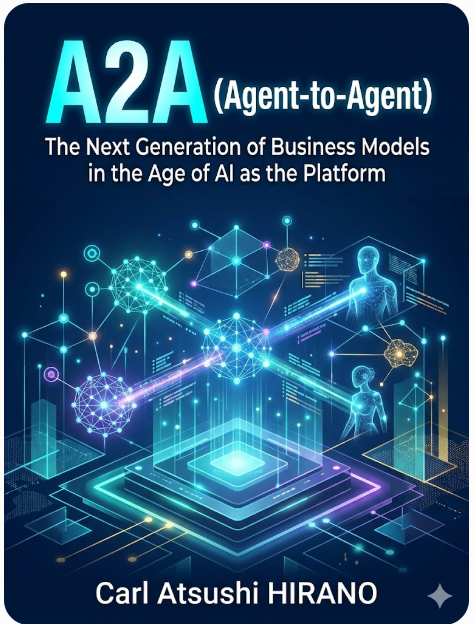

Many business leaders still view AI primarily as an advanced tool for improving the efficiency of existing operations.
- The Strategic Mistake Executives Make: A Category Error
- Architectural Transformation: Redefining the Platform
- The Rise of the Intelligent Layer
- The Evolution and Re-Concentration of Gatekeepers
- The Emergence of the Execution Economy
- Strategic Implications for Executives: The Shift to an API-First Organization
The Strategic Mistake Executives Make: A Category Error
Examples include deploying Microsoft 365 Copilot to increase productivity, leveraging Salesforce Einstein to support sales teams, or implementing chatbots on e-commerce websites. These initiatives undoubtedly generate measurable returns on investment in the short term.
However, calling such initiatives an AI strategy reflects a fundamental misunderstanding.
The core issue is that AI is still being perceived as an application running on top of existing platforms. It is not.
This misconception mirrors the structural mistake made by many companies during the early days of the Internet when they viewed the Web merely as a supplement to traditional media.
Many newspapers and broadcasting companies failed to adapt to the digital age because they committed precisely this category error.
AI is not simply another feature. AI agents are becoming an integrated layer capable of interpreting user intent, making decisions, and executing actions across multiple services. Therefore, the challenge is not how to embed AI into existing systems, but how to redesign the business itself around AI.
This distinction will create dramatically different strategic outcomes.
Architectural Transformation: Redefining the Platform
Until now, the digital economy has been organized as a relatively clear hierarchy.
At the foundation are semiconductors, represented by companies such as NVIDIA and TSMC. Above them sit cloud platforms such as AWS, Microsoft Azure, and Google Cloud. Next come operating systems such as Windows, iOS, and Android. At the top are applications and services including Uber, Airbnb, Shopify, and countless others.
Within this architecture, the greatest value has historically been captured by gatekeeper platforms such as Apple’s iOS, Google’s Android, Amazon, and Rakuten. These companies controlled the last mile of customer interaction and therefore controlled access to demand.
Today, when consumers want to shop online, they typically begin by visiting Amazon or Rakuten. When they search for mobile applications, they go directly to Apple’s App Store or Google Play.
As a result, Apple has been able to charge commissions of up to 30 percent through the App Store, while Amazon’s ranking algorithms can significantly influence merchants’ sales performance.
However, the widespread adoption of AI agents is likely to dismantle this structure.
AI agents developed by companies such as OpenAI, Google, and Anthropic are increasingly capable of completing tasks by orchestrating multiple APIs across different services.
The critical shift is that users will no longer choose which application to use.
Instead, they will simply specify what they want to achieve.
The AI agent will then combine data and capabilities from online stores, Shopify inventory systems, Stripe payment infrastructure, Google Maps location services, and numerous other sources to deliver the desired outcome.
When this happens, individual services lose their direct customer relationship and are redefined as functional providers.
In other words, the meaning of a platform is changing—from a place that captures and locks in users to an intelligence layer that integrates capabilities.
The Rise of the Intelligent Layer
This transformation is already visible in today’s products.
Microsoft is integrating Copilot across Windows, Office, and Azure. Rather than simply placing AI on top of an operating system, Microsoft is effectively rebuilding the operating system around AI.
Google is pursuing a similar strategy. Search is evolving from a directory of links into a system that directly provides AI-generated answers. As a result, users increasingly complete their decision-making process without leaving Google’s ecosystem. Unsurprisingly, bloggers and affiliate marketers who relied on search traffic are beginning to feel the impact.
Amazon is also transforming the purchasing journey. Traditionally, consumers searched for products, compared alternatives, and reviewed customer feedback before making a purchase. Increasingly, AI systems will recommend the optimal product and facilitate a one-click transaction.
The common denominator across these developments is the emergence of what can be called the Intelligent Layer.
The primary user interface is shifting from applications to AI.
Importantly, this does not mean that operating systems or cloud infrastructure will disappear. On the contrary, they remain indispensable execution environments for AI.
What changes is where value accumulates.
Value increasingly migrates away from infrastructure and toward the layer responsible for decision-making.
The Evolution and Re-Concentration of Gatekeepers
The rise of AI agents does not eliminate gatekeepers; it redefines them.
Traditional hubs such as Google Search and Amazon Marketplace may gradually be replaced by AI agents serving as the primary decision-making interface.
Imagine a company asking an AI system to identify the most cost-effective CRM solution.
The AI could compare Salesforce, HubSpot, Zoho, and other alternatives, evaluate them against the organization’s size, industry, and requirements, and recommend the optimal solution.
In such a world, businesses must optimize not for search rankings but for AI evaluation criteria.
The critical question becomes: Will the AI choose you?
Customer reviews, pricing transparency, API usability, integration flexibility, and data quality all directly influence AI-driven recommendations.
Furthermore, companies that control AI systems may themselves become the next generation of platform monopolists.
Microsoft, Google, OpenAI, and Anthropic are accumulating vast amounts of decision-making data through their AI systems, strengthening powerful network effects in the process.
Consequently, gatekeeping power may not become more distributed. It may instead become concentrated among a smaller number of dominant AI players.
The Emergence of the Execution Economy
The essence of AI platforms lies in the integration of decision-making and execution.
Companies such as Stripe and PayPal have already developed sophisticated API-based payment infrastructures, creating an environment where AI agents can directly execute transactions.
Shopify is expanding AI-powered automation capabilities across inventory management, pricing optimization, and advertising operations. Over time, an increasing share of these decisions may be delegated entirely to AI.
As a result, being selected by AI becomes more important than being selected by users.
Marketing priorities will gradually shift from brand communication toward algorithmic compatibility.
Business models will evolve as well.
Advertising-driven revenue models are likely to become relatively less important, while subscription-based and performance-based pricing models gain prominence.
Particularly in B2B markets, new pricing structures may emerge, such as charging customers based on a share of the cost savings generated by AI.
At the same time, if the AI agent market becomes highly concentrated, businesses may face rising costs associated with accessing these AI ecosystems. Complaints regarding escalating prices and usage limitations are already becoming increasingly common.
Strategic Implications for Executives: The Shift to an API-First Organization
Given these structural changes, the strategic response for business leaders is becoming increasingly clear.
Organizations must move beyond application-centric thinking.
Many companies continue investing heavily in proprietary applications and standalone platforms. Yet these investments assume that customers will interact directly with those interfaces.
In a world where AI becomes the primary interface, that assumption no longer holds.
What matters instead is becoming a company that AI agents can easily access, understand, and utilize.
This requires an API-First architecture and compatibility with emerging standards such as the Model Context Protocol (MCP).
Competitive advantage will increasingly belong to organizations that make their data, services, and capabilities securely and efficiently available to AI ecosystems.
Several capabilities become particularly important:
- Standardized API architecture and MCP compatibility
- Real-time data availability
- Robust security and governance
- Transparent pricing and billing structures
Companies will no longer compete primarily as destinations that own customer relationships.
Instead, they will compete as functional modules within larger AI-driven ecosystems.
To differentiate in such an environment, price and quality alone will not be sufficient.
Reliability and data superiority will become decisive competitive assets.
Most importantly, companies possessing proprietary datasets that are inaccessible through the public Internet—data that Google and other AI systems cannot easily obtain—will enjoy significant strategic advantages.
AI is not merely another tool.
It is rapidly evolving into a new decision-making infrastructure—the platform itself.
Only those organizations that redesign their strategies around this reality will be positioned to build sustainable competitive advantages over the next decade.
In the next chapter, we will explore the rise of AI-agent-driven decision outsourcing and the implications of delegating business decisions to autonomous systems.
Platform Strategy® is a registered trademark of NetStrategy Inc.