
The Collapse of Traditional Advertising and the End of the Attention Economy
The Collapse of Advertising and Promotional Tactics and the End of the Attention Economy
The Great Shift from the Attention Economy to the Recommendation Economy
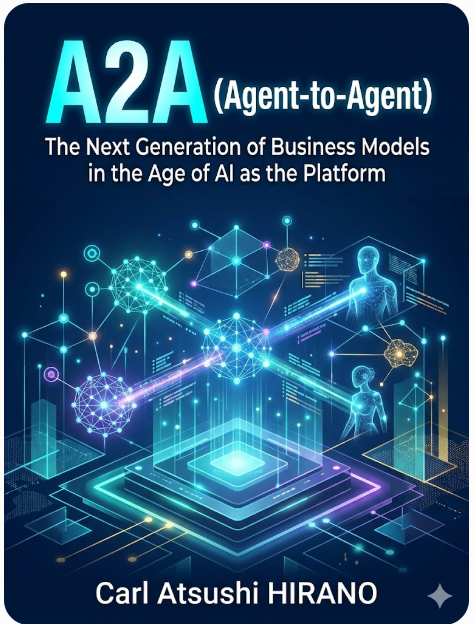
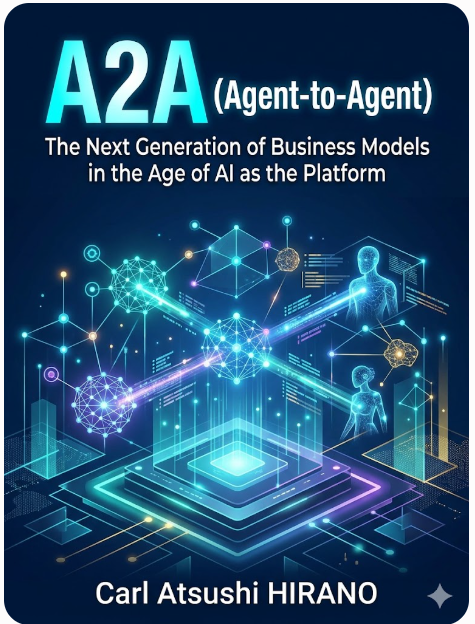
From A2A Revolution: Platforms Will Collapse in the Age of AI
In a world where AI agents become fully established as intermediaries between customers and businesses, the traditional linear B2C (Business-to-Consumer) model may cease to function.
Virtually every consumer business is likely to evolve toward a new architecture:
Business → AI → Consumer (B2AI2C).
This future is already becoming visible. Increasingly, people no longer click through multiple websites after conducting an online search. Instead, they accept the AI-generated summary displayed at the top of the page and move on.
As users become accustomed to delegating information gathering and evaluation to AI, the relationship between companies and customers fundamentally changes.
In such an environment, many of today’s marketing techniques will either lose their effectiveness entirely or experience dramatic declines in value.
Mass advertising becomes increasingly inefficient because AI filters information before it ever reaches the consumer. Large advertising budgets no longer guarantee visibility.
Click-inducing tactics—including pop-ups, dark patterns, and manipulative user interfaces—simply do not work against AI agents.
Retargeting advertisements also become ineffective. AI systems increasingly control cookies, browsing histories, and personal information on behalf of users, making traditional tracking methods obsolete.
AI agents aggressively eliminate information they consider irrelevant, distracting, or manipulative.
As a result, the objective of business changes fundamentally. Companies no longer compete to capture human attention. Instead, they compete to become the option most reliably recommended by AI.
This transformation represents the transition from the Attention Economy to the Recommendation Economy.
The Defeat of Exaggeration
Traditional marketing has long tolerated a certain degree of expectation management. Companies were rewarded for presenting products in the most attractive possible light, sometimes stretching claims and emphasizing emotional appeal over objective reality.
Some critics have even argued that marketers occasionally resemble professional illusionists.
However, such practices become increasingly ineffective when the decision maker is an AI agent.
AI systems process enormous volumes of information within milliseconds. They compare thousands of alternatives simultaneously, evaluate objective performance, and eliminate irrelevant language.
In a world optimized for Large Language Model Optimization (LLMO), exaggerated claims and emotional copywriting may actually lower credibility scores.
Words designed primarily to impress humans can be interpreted by AI as informational noise.
Instead, AI agents value measurable facts:
- Detailed specifications
- Real-time pricing competitiveness
- Verified customer performance data
- Delivery reliability
- Return rates
- Product failure rates
- Operational performance metrics
The future of marketing is therefore not storytelling alone.
The mission of marketing departments shifts from crafting attractive narratives to distributing accurate and structured information through APIs, machine-readable databases, and AI-compatible information channels.
The winners of the next era will not necessarily be the companies with the best slogans.
They will be the companies with the most trustworthy data.
From Static Management to Real-Time Management
AI agents do not make decisions using yesterday’s information.
They make decisions based on what is true at this exact moment.
Questions that AI agents will increasingly ask include:
- How many units are currently in stock?
- What is the factory utilization rate right now?
- If an order is placed immediately, how quickly can delivery be completed?
- What is the current dynamic price based on demand?
If such information is unavailable—or if it cannot be accessed in machine-readable form—AI agents may simply eliminate that company from consideration.
The reason is straightforward.
If an AI agent recommends a product that turns out to be out of stock or subject to delivery delays, the credibility of the AI itself is damaged.
To protect their own reputation, AI systems will avoid companies that cannot provide reliable real-time information.
Consequently, businesses face an urgent need to evolve toward real-time management.
Monthly reports and quarterly earnings announcements represent management systems designed to analyze the past.
But AI ecosystems operate at machine speed.
Executives must therefore build infrastructures that integrate IoT systems, edge computing, ERP platforms, operational databases, and supply chain information into a unified real-time architecture.
Only organizations capable of exposing accurate operational data to external AI agents will remain competitive in the emerging B2AI2C economy.
As AI agents become increasingly sophisticated, one of the most demanding forms of corporate scrutiny will emerge in the form of the AI Audit.
Enterprise Governance in the Age of AI Audits
Unlike human analysts, AI agents do not rely on a single source of information. They do not simply accept a company’s website, annual report, or press release at face value.
Instead, AI systems continuously cross-reference enormous volumes of information, including:
- Government databases
- Supply chain records
- Partner disclosures
- Customer reviews
- Social media conversations
- Independent research reports
- Academic studies
- Industry evaluations
- Public operational data
The result is a new environment in which inconsistencies become highly visible.
If a company promotes sustainability initiatives while its supply chain data reveals excessive emissions, AI systems may quickly detect greenwashing.
If a company advertises superior customer service while customer complaints reveal persistent problems, AI agents will identify the discrepancy.
In the era of AI audits, contradictions between corporate messaging and operational reality become increasingly difficult to hide.
Historically, organizations often operated in silos. Public relations, sales, operations, information systems, and manufacturing frequently maintained separate versions of reality.
AI agents, however, evaluate the entire organization as a single integrated entity.
Once inconsistencies become visible, trust can disappear rapidly.
Therefore, data governance can no longer be viewed as an IT initiative.
It becomes a strategic leadership responsibility.
Boards of directors and executive teams must ensure that every external statement is supported by operational facts and verified data.
Trust becomes an enterprise-wide management discipline.
Reinventing Corporate KPIs
As organizations move toward AI-driven ecosystems and trust-based architectures, traditional performance indicators must also evolve.
Revenue growth and operating profit remain important, but they measure only the final outcome.
In the AI era, executives must also measure the underlying health of organizational trust.
New performance indicators may include:
- AI recommendation rates
- Data accuracy scores
- Real-time information availability
- Supply chain transparency
- Customer trust indexes
- Service reliability metrics
- Response accuracy
- Operational consistency
- Sustainability verification scores
These indicators measure not only financial performance but also an organization’s ability to earn and maintain the confidence of AI systems.
The future competitive advantage of companies may increasingly depend on these trust-related metrics.
From Screen Dominance to AI Trust
The transformation of customer interaction is not simply another technological trend.
It represents a structural shift that affects virtually every industry, including retail, finance, manufacturing, healthcare, real estate, education, logistics, and professional services.
The winners of the internet era were companies that successfully occupied screens and captured human attention.
Their business models were built upon clicks, impressions, engagement, and advertising revenue.
People will continue to enjoy entertainment, social media, and digital experiences.
Screens will not disappear.
However, in a world where AI agents increasingly think, choose, negotiate, and act on behalf of individuals, a new source of competitive advantage emerges.
The companies that prevail will be those that establish robust Trust Architectures and consistently earn the confidence of AI systems.
The future belongs not to the companies that dominate interfaces, but to those that become the most trusted recommendations.
Implications for CEOs
Many executives still devote enormous resources to increasing app downloads, improving click-through rates, or optimizing advertising creative.
While these activities may continue to generate value in the short term, they are unlikely to provide sustainable competitive advantages in the age of AI agents.
The critical question for leadership becomes:
How can our organization become the most trusted choice for AI systems?
The answer requires fundamental changes:
- Building real-time operational infrastructure.
- Establishing enterprise-wide data governance.
- Eliminating inconsistencies between messaging and reality.
- Creating machine-readable information environments.
- Integrating operational systems with external AI ecosystems.
- Measuring trust as a strategic asset.
Trust Architecture is no longer a marketing initiative.
It becomes the operating system of the enterprise.
Only those leaders who make the strategic decision to embed trust into the very structure of their organizations will be positioned to capture the enormous opportunities of the emerging Business-to-AI-to-Consumer economy.
The next era of competition will not be determined by who captures the most attention.
It will be determined by who earns the greatest trust from AI.
In the age of AI agents, trust becomes the new currency, data becomes the new product, and recommendation becomes the new market.
The companies that understand this shift earliest will define the next era of capitalism.
TBC